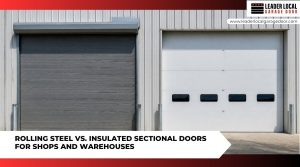
Pick a rolling steel door when ceiling space is tight, security matters most, and the opening doesn’t need to hold heat or cool air. Pick an insulated sectional door when you’re paying to condition the space, want windows, or expect the occasional bump from a forklift. Plenty of buildings need both, one for each kind of opening.
The right answer comes from the building, not the brochure. If you’re planning a commercial garage door installation, this guide walks through the questions that decide it: space, cycles, energy use, security and loading docks. If you’re shopping for a home garage instead, our guide to residential garage door types covers that side.
How Is a Rolling Steel Door Built Differently From a Sectional Door?
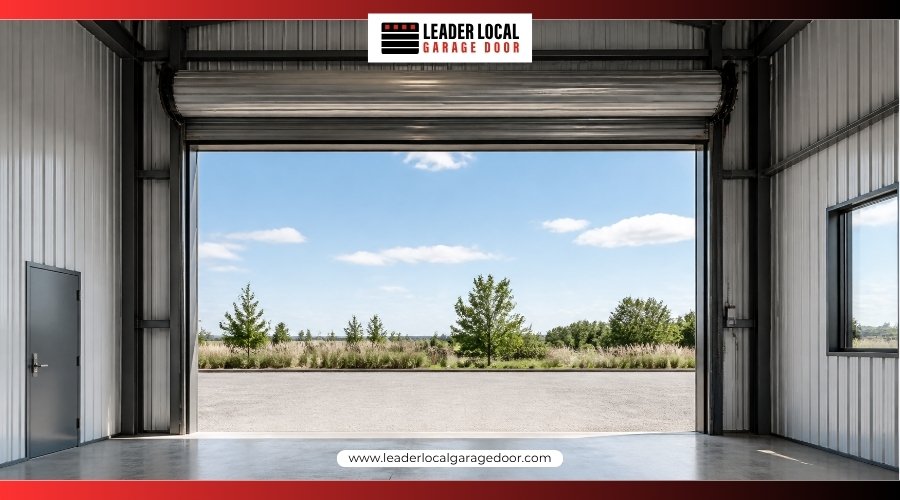
A rolling steel door is a curtain of narrow, interlocking steel slats that coils around a barrel mounted above the opening. The counterbalance springs live inside that barrel. When the door opens, the whole curtain wraps up into a tight roll and the space below stays clear.
A sectional door is a set of wider panels joined by hinges. Rollers on each panel ride in tracks, so the door travels up and then back along the ceiling, or straight up the wall on a high-lift or vertical-lift setup. Torsion springs on a shaft above the opening do the lifting.
That one difference, coil versus track, drives almost every other trade-off below.
Which Door Needs Less Ceiling and Back-Room Space?
A rolling steel door needs room above the opening for the coil and very little space behind it. A sectional door needs headroom for its tracks plus enough back-room for the panels to lie flat when open.
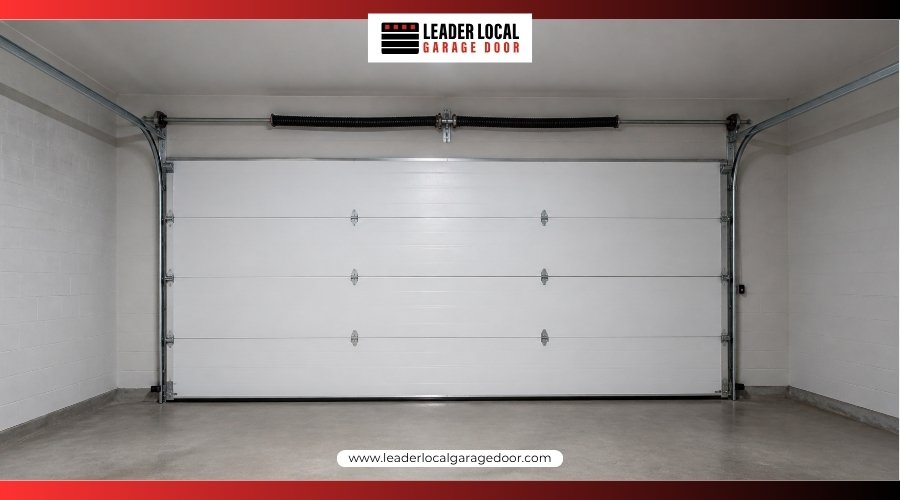
This matters more than people expect. Overhead heaters, light fixtures and sprinkler lines often sit right where a sectional door’s tracks need to go. Sectional doors come in standard-lift, high-lift and full vertical-lift layouts to work around some of this, but each one still needs clear wall or ceiling space. In a shop with a low or crowded ceiling, a rolling door is usually the easier fit.
Before any quote, measure three things: headroom above the opening, side room on each side, and back-room from the opening to the first obstruction. Those numbers rule options in or out faster than any spec sheet.
Which Holds Up Better to Heavy Daily Use?
Both door types can handle heavy commercial traffic. Durability comes down to the spring system you order, not the style of door.
One cycle is one full open and close. To estimate yours, multiply opens per day by working days per year. A door that opens 20 times a day, five days a week, runs about 5,000 cycles a year (20 x 250).
Now compare that to the springs. Traditional rolling doors are built around 10,000 or 20,000-cycle springs, according to a rolling-door product manager writing in the trade magazine Metal Architecture. On that 5,000-cycle door, a 10,000-cycle spring is due in about two years. Manufacturers such as Clopay offer high-cycle torsion springs for both rolling and sectional doors. Spring ratings go well past the standard ones: commercial door manufacturer Garaga, for example, offers torsion springs rated at 25,000, 50,000, 75,000 or 100,000 cycles.
So ask any installer one plain question: what cycle rating are these springs built for, and how many years will that last at our usage?
Is an Insulated Sectional Door More Energy Efficient Than an Insulated Rolling Door?
Yes, in most cases. Insulated rolling doors use foam-filled slats, but the slats have no thermal break and the curtain has many joints. Clopay’s commercial specs put insulated rolling doors at about R-8 at most, while its insulated sectional doors go up to R-22.2.
Don’t stop at the R-value on the panel, though. The door industry’s trade group, DASMA, points out that a section’s R-value doesn’t tell you how the whole door performs. Codes and standards rate doors by the U-factor of the complete door assembly. When you compare quotes, ask for the tested U-factor of the full door. Lower is better.
The local reality here is simple. Long, hot summers in the Sacramento Valley make an uninsulated door a big heat source for any bay that shares air with an office or a climate-controlled work area. If the space is unconditioned storage, though, paying for insulation buys you very little.
Which Door Is More Secure After Hours?
Rolling steel usually wins on security. The curtain is continuous steel, there’s no glass by default, and the edges run inside steel guides. That’s why rolling doors and grilles show up on storefronts, service counters and high-value storage.
Sectional doors can be just as solid if you skip the windows and add a good lock or an opener that locks the door in place. Full-view glass sectionals look great on a showroom or restaurant, but they trade some security for light and visibility. If you want airflow and a view without giving up a steel barrier, a perforated or grille-style rolling door is a middle option.
What Happens When a Forklift Hits the Door?
A sectional door is usually easier and faster to fix after an impact. Each panel is its own piece, so a technician can swap the damaged section, a roller or a hinge without replacing the whole door.
A rolling door is harder to put back together. Damaged slats are difficult to replace one at a time, and a dented curtain can bind in the guides or refuse to coil. The springs are enclosed inside the barrel, which makes spring work slower and more involved than on a sectional.
If your opening sees forklifts, delivery trucks or tight turns, plan for impacts. Bollards, guide protectors and a door type you can repair quickly will save downtime. When something does get hit, our garage door repair technicians can tell you whether a panel swap is enough or the door needs more work.
Which Door Works Better at a Loading Dock?
Both work at a dock, and both are common in warehouses. DASMA’s technical guidance on dock doors lists sectional, rolling, high-performance and sheet doors as dock options. It says the choice comes down to headroom, thermal performance, how the door is operated and how often it runs.
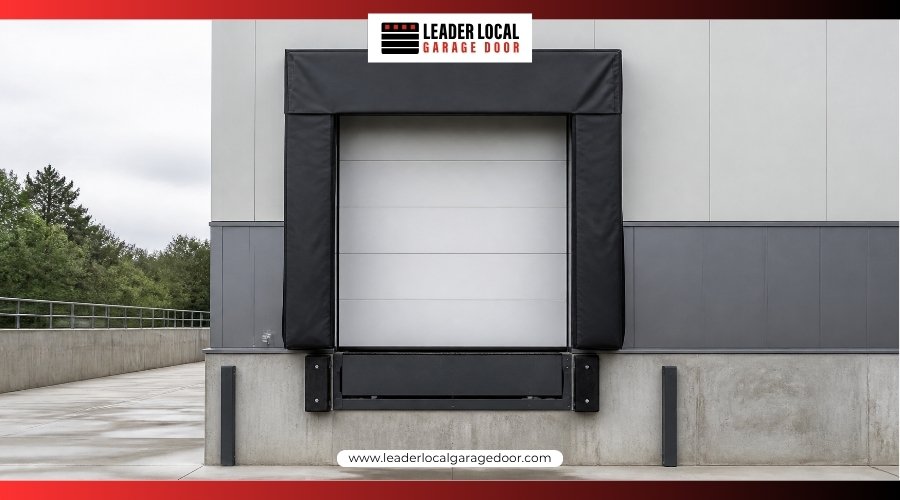
That gives you a simple rule. At a temperature-controlled dock, an insulated sectional usually makes more sense, and windows help staff see the trailer. At a dock with limited overhead space, or one where security matters more than temperature, a rolling door is the stronger pick.
One more check: if the opening sits in a fire-rated wall, your building code will call for a labeled fire door. Fire-rated rolling doors are a common choice in warehouses and factories for exactly that reason.
Rolling Steel vs. Sectional at a Glance
| What you care about | Rolling steel door | Insulated sectional door |
|---|---|---|
| Ceiling space used | Coil above opening only | Tracks and panels along ceiling |
| Energy performance | Lower (no thermal break) | Higher (insulated panels, better seals) |
| After-hours security | Very strong, solid steel curtain | Strong if solid; windows reduce it |
| Windows and natural light | Small vision slots only | Many options, up to full-view glass |
| Repair after impact | Harder, slats and barrel springs | Easier, swap a single panel |
| Best fit | Tight ceilings, secure storage, fire-rated walls | Conditioned bays, cold docks, showrooms |
If you’re weighing both options for a real opening, tell us about the door and the space and we’ll look at the opening and give you a free estimate before you commit to either.
What Should You Check Before Signing a Quote?
Start with the license. California requires a state contractor license for any job over $1,000, and for smaller jobs that need a permit, so almost any commercial door installation calls for one. You can look up any contractor on the Contractors State License Board’s license check.
Next, get the specifics in writing: door make and model, spring cycle rating, the insulation’s tested U-factor if the space is conditioned, and the warranty terms. We install and service doors from manufacturers including CHI, Clopay, Amarr, Raynor and Wayne Dalton, and our work carries a 12-month warranty on parts and a 30-day warranty on labor.
Leader Local Garage Door is a licensed garage door company based in Sacramento, CA, installing and repairing both residential and commercial doors across the Sacramento Valley. If you’re deciding between a rolling steel door and an insulated sectional for a shop bay, warehouse opening or dock, our team can look at the space and help you match the door to the job.
Frequently Asked Questions
What is the difference between a roll-up door and a sectional door?
A roll-up door is made of narrow steel slats that coil around a barrel above the opening. A sectional door is made of wider hinged panels that ride on tracks and slide back along the ceiling. Roll-up doors save ceiling space, while sectional doors insulate better and are easier to repair after damage.
Can you insulate a rolling steel door?
Yes. Many rolling steel doors come with foam-filled insulated slats. They still insulate less than an insulated sectional door because the slats have no thermal break and the curtain has many joints. For a heated or air-conditioned space, compare the tested U-factor of each complete door, not just the slat R-value.
Are commercial roll-up doors more secure than sectional doors?
Commercial roll-up doors are usually more secure. The solid steel curtain runs inside steel guides, and there’s no glass unless you add it. A solid sectional door with a proper lock can also be very secure. Adding full-view windows to a sectional trades some security for natural light and visibility.
How long do commercial door springs last?
Commercial door springs are rated in cycles, and one cycle is one full open and close. Traditional rolling-door springs are commonly built for 10,000 or 20,000 cycles, while high-cycle springs run from 25,000 to 100,000. At 20 opens a day, five days a week, a 10,000-cycle spring lasts about two years.
What is the best overhead door for a warehouse?
The best overhead door for a warehouse depends on each opening’s headroom, temperature needs and daily use. Insulated sectional doors suit conditioned bays and temperature-controlled docks. Rolling steel doors suit tight ceilings, secure storage and fire-rated walls. Many warehouses use both types, matched to how each opening is used.