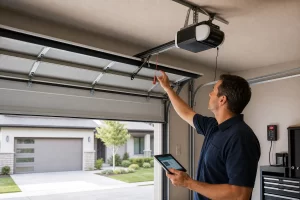
If your garage door starts to close but immediately reverses, your garage door sensors may be blocked, dirty, or out of alignment. Automated garage doors use an infrared beam to detect objects and help prevent injuries.
When the beam is blocked or the sensors lose alignment, the door may reverse during closing or refuse to close using normal controls. Fortunately, you can usually fix these common garage door problems yourself in just a few minutes.
Why is my garage door sticking or reversing?
Garage doors automatically reverse when the safety sensors detect an object in their path or when they lose alignment with each other. Many garage door openers use flashing lights or diagnostic indicators to signal a safety sensor problem.
This built-in safety feature helps keep the door from closing on items, pets, or people. If the door opens normally but refuses to close, blocked, misaligned, damaged, or improperly wired safety sensors are common causes. The Consumer Product Safety Commission recommends that homeowners regularly test the reverse function to ensure these safety mechanisms work properly.
How do garage door safety sensors work?
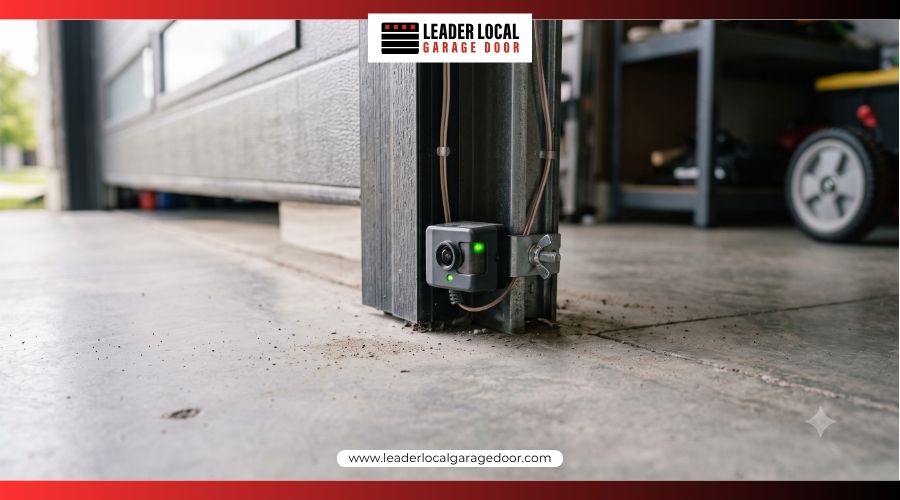
The safety system uses a sending sensor and a receiving sensor. These small photo eyes sit near the floor on opposite sides of the door tracks.
- The sending unit projects an invisible infrared light beam across the garage door opening.
- The receiving unit captures the infrared light beam and confirms that the path is clear.
If an object breaks the beam, the opener detects the interrupted safety signal and stops or reverses the closing door. As a result, the opener stops the downward motion and sends the door back to the fully open position.
What causes garage door sensors to stop working
Sensors stop working when dirt, blocked lenses, loose brackets, or wiring issues interrupt the infrared safety beam.
Before replacing any parts, check for these common problems:
- Physical objects may block the beam. Trash cans, bicycles, tools, storage boxes, or thick cobwebs can interrupt the signal.
- Dirty lenses can stop the sensors from reading each other. Dust, dirt, and moisture can coat the small sensor eyes.
- Loose brackets can shift the sensors out of line. Normal door movement can cause light vibration over time.
- On some garage door opener systems, direct sunlight can interfere with the receiving sensor. Bright sunlight may overpower the infrared signal during certain times of day.
- Damaged low-voltage wires can stop the sensors from receiving power or sending a signal to the opener.
How do I reset and realign my garage door sensors?
You can reset garage door sensors by clearing the sensor path, cleaning the lenses, and adjusting the brackets until both indicator lights stay solid.
Follow these steps before calling for service:
- Clear the area: Remove objects near the tracks. Wipe away dirt, leaves, and spiderwebs around both sensors.
- Clean the lenses: Use a clean, dry microfiber cloth to wipe the small lens on each sensor. Avoid harsh cleaners that may scratch or cloud the plastic.
- Check the sensor lights: Look for blinking or dead indicator lights. Depending on the opener model, a blinking sensor light may indicate misalignment, obstruction, wiring problems, or another sensor fault.
- Adjust the brackets: Loosen the wing nut on the sensor bracket. Gently move the sensor up, down, or side to side until the light turns solid.
- Tighten the hardware: Hold the sensor in place and tighten the wing nut by hand.
- Inspect the wires: Check the thin, low-voltage wires running from the sensors to the opener motor. Look for loose connections, cuts, staples, or pest damage.
- Test the door: Press the wall button and watch the door close. If the door closes smoothly, the sensors are aligned.
Do not force the garage door closed if the sensors still fail. A sensor issue can point to a deeper problem with the opener, wiring, or track.
When should I call a professional garage door technician?
You should call a professional technician if the sensor lights stay off, the wires look damaged, the tracks are bent, or the door still reverses after basic troubleshooting.
Homeowners can safely clean and realign photo eyes, but electrical problems, damaged opener parts, broken springs, and bent tracks need trained service. These repairs can create safety risks if handled without the right tools and experience.
Residential automatic garage door openers manufactured for sale in the United States must comply with federal entrapment-protection requirements. Current garage door operator safety rules also include requirements tied to the federal garage door opener safety standard, which reflects updates to UL 325. If your opener cannot correctly detect sensor problems, a technician should inspect it before you continue using the system.
California homeowners also need to consider battery backup rules. Under California Senate Bill 969, residential automatic garage door openers sold or installed in California on or after July 1, 2019, must include a battery backup function.
If you have already cleaned, aligned, and tested the sensors, but the door still will not close, schedule service. A technician can check the opener logic board, sensor wiring, photo eyes, door balance, and track alignment.
Secure your home with professional garage door repair
If resetting the safety sensors does not fix your overhead system, reach out to a trained technician before forcing the door closed.
Leader Local Garage Door is a 24/7 garage door service company in Sacramento CA, specializing in garage door repair, garage door installation, and garage door openers for homeowners. Contact our team today to schedule professional garage door repair in Sacramento and restore your door’s safety and function.
Frequently Asked Questions
How do you know if garage door sensors are bad?
A dead sensor light or a door that keeps reversing can point to a bad sensor. Check the alignment, lens, and wires first.
Can you bypass the safety sensors?
No. Bypassing safety sensors creates a serious hazard for children, pets, and property. Repair or replace the faulty parts instead.
Is a garage door safety system legally required?
Federal rules require modern residential openers to include entrapment protection, such as photo eyes or an equivalent safety device.
Why is one sensor light green and the other yellow?
Sensor light colors vary by manufacturer and model. Check your opener manual to identify the sending and receiving sensors and interpret their indicator lights correctly.
How high should the photo eyes be mounted?
Photoelectric sensors should be installed so the beam is no more than 6 inches above the garage floor, following the opener manufacturer’s installation instructions.