A broken garage door is a major security risk and safety hazard, but fixing it yourself is often easier than you might think. Many homeowners jump to worst-case scenarios when their system acts up, assuming they need a full replacement for common LiftMaster garage door opener problems. The truth is that you can resolve most issues with a few simple checks and adjustments without spending money on a technician. In this guide, we will walk you through the most frequent issues and how to solve them.
List of Common LiftMaster Garage Door Opener Problems
Modern LiftMaster systems are built to tell you exactly what is wrong through diagnostic blink codes and sensor behaviors. Understanding these signals helps you bypass the guesswork and fix the specific mechanical or electrical fault.
The Door Reverses Immediately
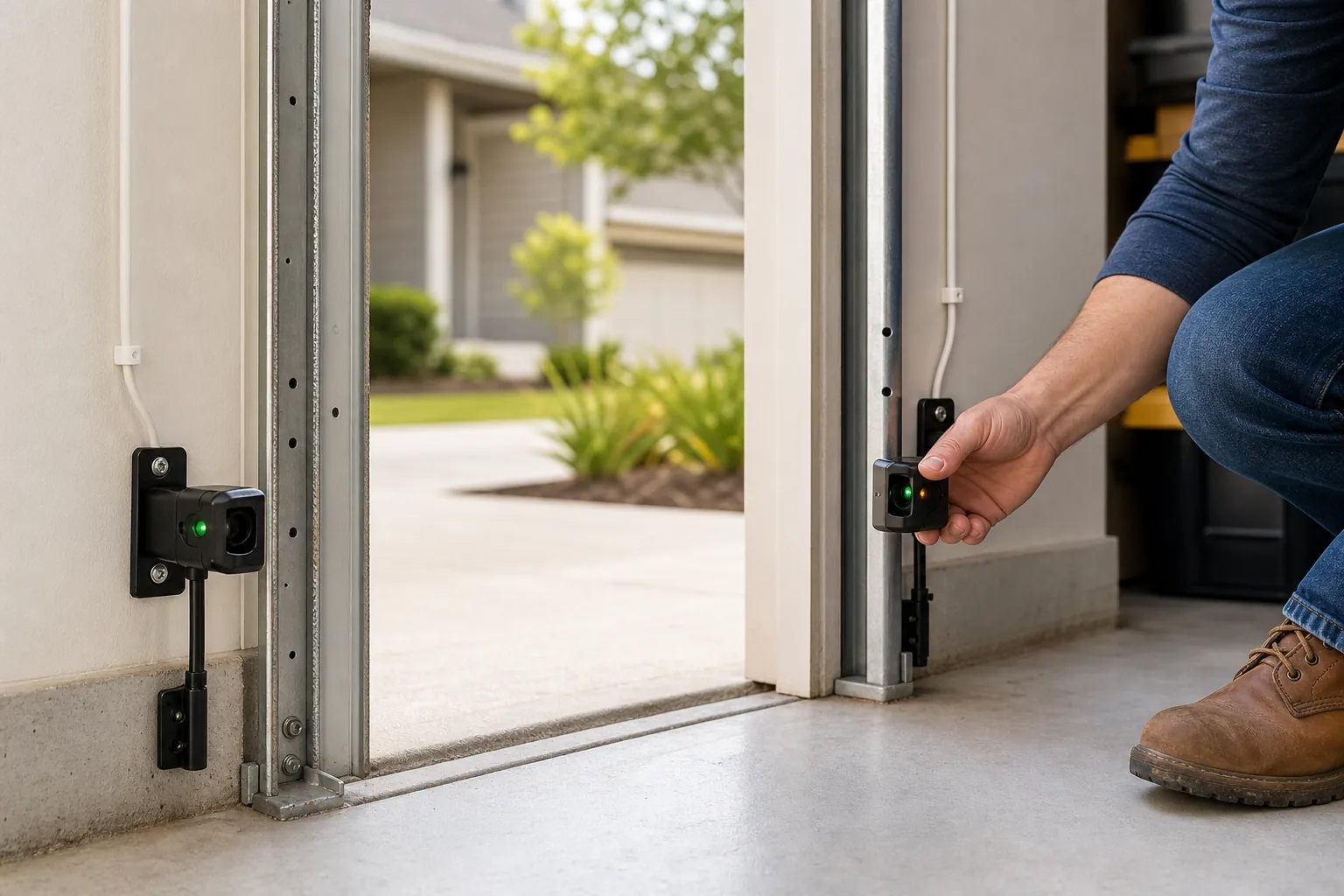
If your door refuses to close and the overhead lights flash ten times, you have a sensor fault. The logic board believes a person, pet, or object is blocking the downward path of the door. LiftMaster uses an invisible infrared beam to monitor the threshold of your garage. When that beam is interrupted, scattered, or misaligned, the system defaults to its fail-safe mode and aggressively reverses direction to comply with federal entrapment laws.
This happens frequently after someone bumps a sensor with a trash can, when yard debris blows across the lens, or when seasonal temperature changes cause the metal track brackets to shift slightly.
How to Fix It:
Check the small indicator lights on both sensors near the floor. The sending sensor uses an amber light, and the receiving sensor uses a green light; both must be glowing solidly.
- Wipe both sensor lenses with a clean microfiber cloth to remove dust, cobwebs, and moisture.
- Inspect the mounting brackets to ensure they are rigidly attached to the track and have not been bent inward.
- Loosen the wing nut on the receiving sensor and pivot the bracket gently until the green light glows solid without flickering.
- Hand tighten the nut to lock the bracket back in place and run a test cycle.
The Door Stops Halfway
When a garage door stops halfway before it fully opens or closes, the opener’s internal travel limits are completely out of sync. The motor relies on a programmed digital profile to know exactly how far to push the door down and how far to pull it up.
If a severe power surge scrambles the logic board or if the physical door naturally settles over the years, the motor gets confused. It assumes the door has already hit the concrete floor when it is actually suspended two feet in the air, forcing it to stop prematurely.
How to Fix It:
- Locate the adjustment buttons on the side or back panel of your motor unit.
- For modern units, press and hold the black adjustment button until the up arrow flashes, then hold the up arrow to set your preferred open position and press the black button to save it.
- Repeat the process using the down arrow to set your closed position, then press the wall button to allow the unit to run a full automated cycle so it can learn the required force profile.
- For older units, use a flathead screwdriver to physically turn the plastic up and down limit dials on the side of the casing.
The Motor Hums But the Door Stays Put
If the motor hums loudly but the door remains completely stationary, the motor is generating electrical power but failing to transfer it to the mechanical drive system. This represents a severe disconnect between the brain of the opener and the physical lifting mechanism. In most cases, the trolley carriage has simply been manually disengaged, leaving the motor to spin freely on the rail.
On older units, this specific humming sound paired with zero movement points to a stripped internal drive gear. This failure happens when the motor is forced to push a heavy, unbalanced door up and down for a decade until the plastic nylon teeth completely shear off.
How to Fix It:
- Look at the trolley on the overhead rail to see if the inner slider is physically separated from the outer carriage.
- Pull the red emergency release cord at an angle toward the garage door to reset the spring-loaded latch mechanism.
- Activate the opener wall button so the inner carriage runs along the rail and clicks back into the trolley securely.
- If the trolley is connected but the chain does not move, inspect the top of the motor cover for white plastic shavings, which strongly indicate the internal drive gear may need replacement.
Remotes Have Terrible Range or Fail Completely
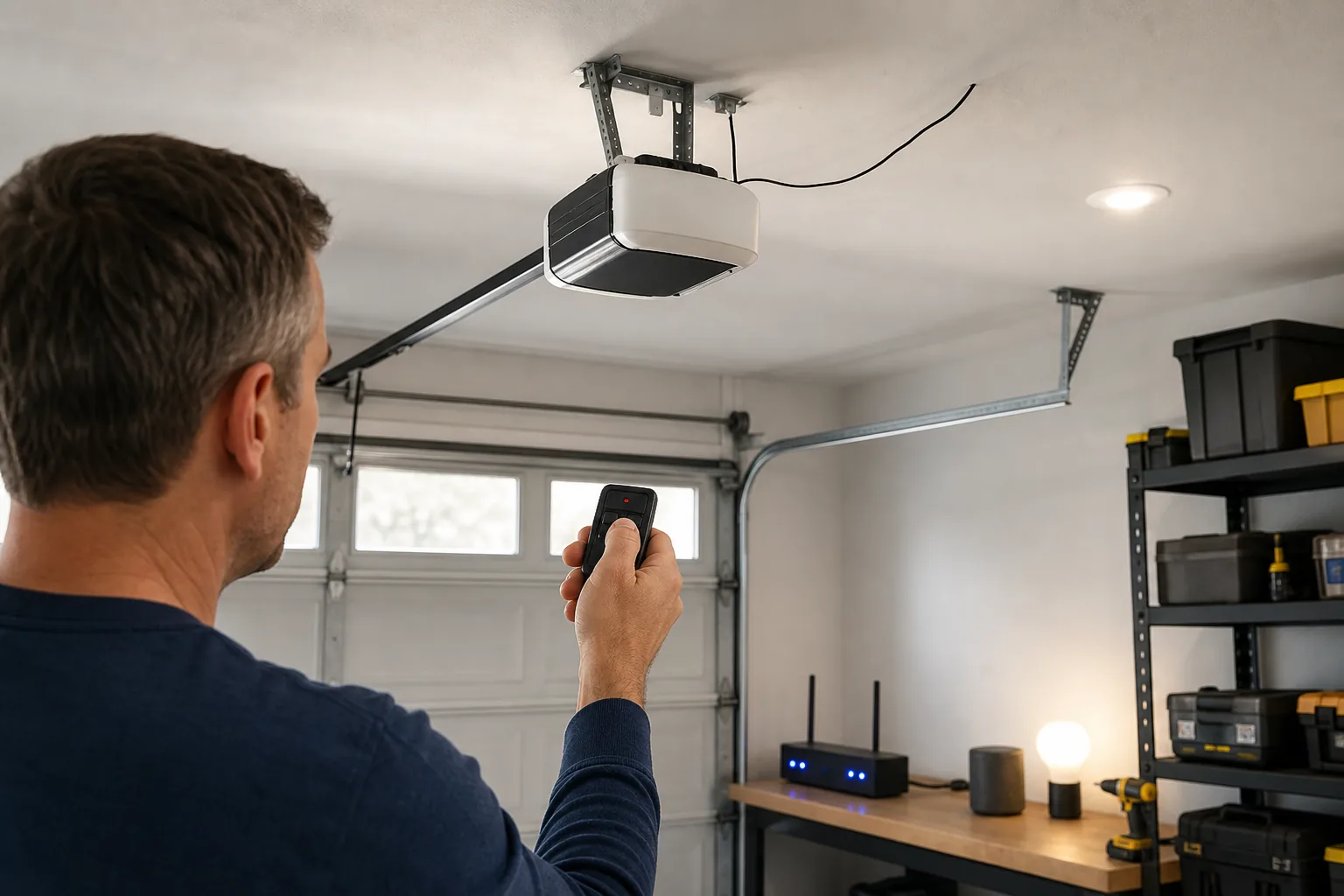
If fresh batteries do not fix your remote, you are dealing with radio frequency interference or a wiped logic board memory. LiftMaster remotes rely on a specific megahertz frequency to communicate with the motor antenna.
When you install cheap electronics or unshielded light bulbs nearby, they bleed signal noise into the garage and drown out the remote command. If your operational range suddenly drops from fifty feet to five feet, interference is almost always the culprit.
How to Fix It:
- Check the light sockets located under the plastic covers on your opener motor unit.
- Remove any cheap aftermarket LED bulbs, as their internal drivers leak frequencies that heavily jam remote signals.
- Replace them with standard incandescent bulbs or specialized LiftMaster-approved LEDs.
- Unplug any new electronics in the garage, like battery chargers, power tools, or pest deterrents, to isolate the interference source.
- Locate the small antenna wire hanging from the back of the motor and ensure it points straight down rather than being bunched up.
- Press the Learn button on the motor and press your remote button to re-pair the connection if the system completely drops the device.
myQ Wi-Fi Connectivity Fails
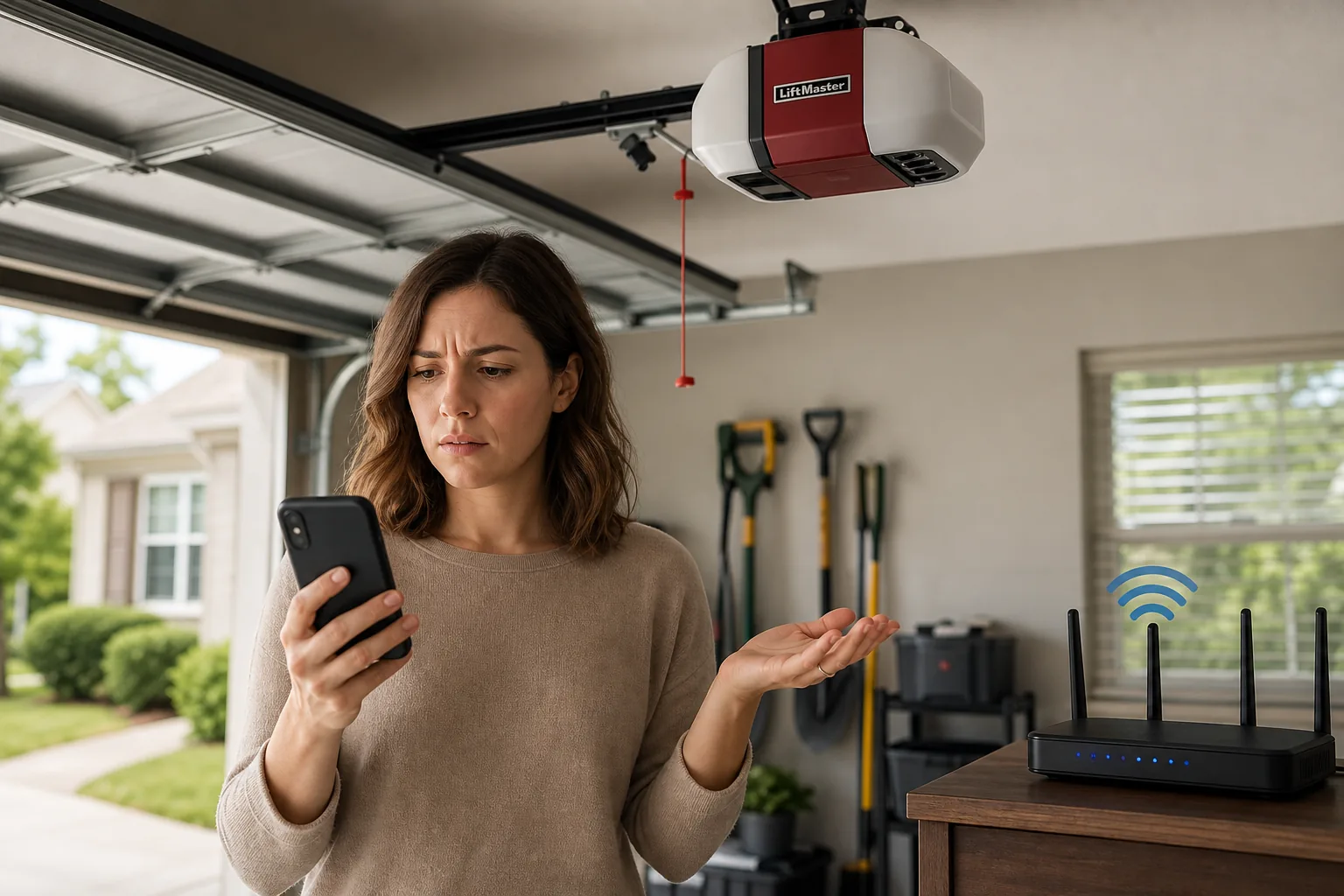
For smart homes, a disconnected myQ app is highly frustrating. If your phone can’t open the door, check the LED on the wall control panel or the Wi-Fi hub.
How to Fix It:
- Garages are notorious for terrible Wi-Fi due to thick firewalls and metal interference. Check your phone’s Wi-Fi signal while standing next to the motor. If it’s weak, you may need a Wi-Fi extender in the garage.
- LiftMaster myQ systems only connect to 2.4 GHz networks, not 5 GHz. Ensure your router is broadcasting a 2.4 GHz band and that your phone is connected to it during the initial setup process.
Garage Door Opener Laws, Standards, and Requirements
Garage doors are among the largest moving objects in your home, making them subject to strict safety regulations that dictate exactly how your opener must function. Here are the core compliance rules you need to know before modifying your system:
- Federal Safety Standard UL 325: Garage door openers manufactured after 1993 must include external entrapment protection devices such as photo eye safety sensors.
- Bypassing Sensors Is Illegal: Disabling or bypassing garage door safety sensors can violate safety regulations and create serious liability and injury risks.
- California SB 969 Mandate: If you live in California, state law requires all new openers to include a built-in battery backup so the door remains functional during power grid failures.
- Reversal Test Compliance: The industry standard dictates that a closing door must automatically reverse direction if it strikes a rigid object placed flat on the garage floor.
How a Professional Garage Door Opener Repair Service Can Help
While you can handle basic sensor alignment and limit adjustments yourself, the physical lifting components of a garage door are too dangerous for a standard homeowner to tackle. A certified technician brings the necessary insurance, heavy-duty tools, and mechanical training to safely handle the following situations:
- Replacing Broken Torsion Springs: These heavy metal coils hold lethal amounts of tension and require professional winding bars to install safely without risking severe injury.
- Fixing Snapped Lift Cables: Cables work alongside the springs to bear the massive weight of the door and must be balanced perfectly by an expert to prevent the door from derailing.
- Diagnosing Logic Board Failures: A professional can use specialized multimeters to determine if your motor brain is fried from a lightning strike or if a simple internal wiring harness is loose.
Get Your LiftMaster System Back on Track
Fixing your garage door does not have to be a frustrating experience when you know exactly what mechanical signs to look for. Always check your power sources and safety sensor alignment before assuming you have a dead motor. While simple limit tweaks, remote programming, and lens cleaning are easy DIY fixes, remember to leave the heavy lifting parts like springs and cables to a certified pro to avoid serious injury.
Restore your reliability. Connect with our garage door opener repair technician to perform a full system scan and replace faulty logic boards or drive components. Leader Local Garage Door is a 24/7 garage door service company in Sacramento CA, specializing in garage door repair, garage door installation, and garage door openers for homeowners.
Frequently Asked Questions
Why is my LiftMaster opener blinking 5 times?
Blinking codes vary by LiftMaster model, but repeated five-flash patterns are commonly related to RPM sensor issues, overheating, or internal logic board faults. Unplug the unit for 15 minutes to let the motor cool down completely. If the blinking continues after you plug it back in, you will likely need to replace the logic board.
What does LiftMaster error code 4-1 mean?
An error code flashing four times up and one time down usually indicates a safety sensor misalignment, obstruction, or wiring issue. You should check the sensor wiring for shorts, look for staples piercing the wire jacket, and ensure the lenses are perfectly aligned.
Why does my LiftMaster hum, but the door doesn’t move?
This usually means the trolley is disengaged from the drive chain or the internal drive gear is completely stripped. Reconnect the emergency release latch by pulling it toward the door, and if the motor still hums without moving the chain or belt, inspect the opener for worn or damaged internal drive gears.
How do I fix a LiftMaster that opens by itself?
Phantom operations are typically caused by a short in the wall button wiring or neighborhood radio frequency interference. Check the wires behind your wall console for exposed copper touching the metal bracket, and erase the logic board memory to clear out any stray remote codes.
Why does my garage door reverse as soon as it hits the floor?
The downward travel limits are set too far, causing the motor to push the door into the concrete floor too hard. The opener interprets this extreme resistance as a physical obstacle and reverses the door for safety. You can fix this by adjusting the down limit dial or reprogramming the digital closed position slightly higher.
Related reading: broken garage door issues and what to do when your garage door stops halfway. For myQ support details, see the official myQ app documentation.