California homeowners are always looking for ways to improve energy efficiency and reduce their carbon footprint. One often-overlooked area is the garage door. By upgrading to an energy-efficient garage door, you can significantly improve your home’s insulation, reduce your energy consumption, and lower your utility bills.
In this blog, we’ll discuss how to improve energy efficiency with California garage doors.
Choose the Right Material
The material of your garage door plays a big role in its energy efficiency. Look for garage doors made from insulated materials such as steel, wood, or aluminum. These materials offer better insulation and help keep your garage cooler in the summer and warmer in the winter.
You can also look at the thickness of the material. Thicker materials provide better insulation. Plus, choosing a durable door that can withstand the climate in your area is a good idea. Wood doors, for example, can be susceptible to moisture and rot in wet climates, while steel doors may rust in coastal areas with high salt content in the air.
Install Weather Stripping
Weather stripping is a material that is used to seal the gaps between your garage door and the frame to prevent outside air from seeping into your garage. It can be made of materials such as vinyl, rubber, or foam, and is typically installed around the perimeter of the garage door.
Weather stripping provides several benefits for garage doors, including:
- Improved energy efficiency: By sealing gaps around your garage door, weather stripping can help reduce drafts and prevent outside air from entering your garage. This can help keep your garage cooler in the summer and warmer in the winter, reducing your energy consumption and lowering your utility bills.
- Increased comfort: By reducing drafts and preventing outside air from seeping into your garage, weather stripping can improve the overall comfort of your garage. This is especially important if you use your garage as a workspace or spend a lot of time in it.
- Reduced noise: Weather stripping can also help reduce noise from outside, such as traffic or neighbors, making your garage a quieter and more peaceful space.
- Improved durability: Weather stripping can help prevent moisture and debris from entering your garage, which can help improve the overall durability of your garage door.
Add Insulation
If your garage door is not already insulated, consider adding insulation to improve energy efficiency. Insulation helps to keep your garage at a more consistent temperature by preventing heat from escaping in the winter and keeping cool air inside in the summer. Insulation can also help reduce noise from outside and improve the overall durability of your garage door. Insulation is great because you don’t need to have a new garage door to use it; you can install various kinds of garage door insulation to your existing door.
Upgrade to Energy-Efficient Windows
If your garage door has windows, consider upgrading to energy-efficient windows. Low-E windows can reduce the amount of heat that enters your garage in the summer and prevent heat from escaping in the winter. This can help keep your garage at a more consistent temperature, reduce energy consumption, and lower your utility bills.
They achieve this through several mechanisms, such as:
- Insulated glass: Energy-efficient windows often use insulated glass, which consists of two or more panes of glass separated by an insulating air space. This helps to reduce heat transfer through the window.
- Low-emissivity coatings: These coatings are applied to the glass to reduce the amount of heat that enters or escapes through the window. They work by reflecting heat back into the room or keeping it out, depending on the climate.
- Gas fills: Some energy-efficient windows are filled with inert gases such as argon or krypton, which are more effective insulators than air. This further reduces heat transfer through the window.
- Framing materials: The framing materials used in energy-efficient windows are also designed to reduce heat transfer. Materials such as vinyl, fiberglass, and wood are commonly used because they are good insulators.
Install a High-Quality Sealant
A high-quality sealant can help prevent air from leaking through the gaps around your garage door. This is especially important if you have an attached garage (versus a detached garage).
Here are some characteristics to look for to ensure you are using a high-quality sealant:
- Material: Look for sealants made from high-quality materials such as silicone, polyurethane, or acrylic latex. These materials are typically more durable and long-lasting than cheaper alternatives.
- Application: A high-quality sealant should be easy to apply and should adhere well to the surface of your garage door. It should also be able to fill gaps and cracks effectively to create a tight seal.
- Resistance: A good sealant should be resistant to water, UV rays, and other environmental factors that can cause it to break down over time. Look for sealants that are specifically designed for outdoor use and have a long lifespan.
- Appearance: While appearance isn’t the most important factor, a high-quality sealant should also look good on your garage door. Look for a sealant that is available in a variety of colors or is clear to match the color of your garage door.
- Brand reputation: Finally, consider the reputation of the brand you are using. Look for brands that have a good reputation for producing high-quality sealants, and check reviews from other users to ensure that the sealant you are using has a good track record of success.
Upgrade to an Energy-Efficient Garage Door Opener
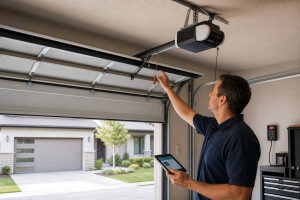
Garage door openers are another area where you can improve energy efficiency. Look for garage door openers that are Energy Star certified which are designed to use less energy than traditional models. You can also opt for a DC-powered motor, which uses less energy than an AC-powered motor. Many smart garage doors openers fit this bill and offer improved energy efficiency.
Improving energy efficiency with California garage doors is a smart investment that can help reduce your carbon footprint, lower your utility bills, and improve the comfort of your home. By choosing the right material, installing weather stripping and insulation, upgrading to energy-efficient windows and a high-quality sealant, and opting for an energy-efficient garage door opener, you can make your garage more energy-efficient and environmentally friendly.