A broken garage door spring instantly removes your door’s lifting power, trapping your vehicle inside and creating a severe drop hazard. You must replace the snapped coil immediately to restore safe access to your home. Understanding the mechanics of your tension system (see our guide on garage door spring systems) helps you verify the problem and take the correct next steps without risking physical harm.
How Do You Identify a Broken Garage Door Spring?

Knowing the exact signs of a mechanical failure helps you act fast. The most obvious indicator is a loud noise coming from the garage.
You often hear a sharp, explosive sound when the tightly wound steel coils snap under pressure. After you hear this, look at the metal spring above the door. You will usually see a distinct, visible gap separating the two pieces of the coil.
Your automatic opener will also struggle to lift the heavy panels, or it will fail completely. If you attempt to lift the door manually, it will feel extremely heavy because it lacks the necessary counterbalance.
What Are the Dangers of DIY Garage Door Spring Repair?
Once you identify the broken spring, you must understand the risks of attempting the fix yourself.
Tensioned garage components store massive amounts of force to lift doors weighing hundreds of pounds. Improper handling frequently leads to disastrous outcomes.
- Severe physical injury: Using incorrect tools or losing your grip causes the heavy spring to release its stored energy violently, resulting in facial and hand injuries.
- Property damage: An unsupported, heavy garage door can drop suddenly and crush items below.
- System imbalance: Incorrect spring calibration damages your tracks, cables, and opener motor.
For your safety, trained professionals must always handle tension system replacements.
What Are the California Safety Rules for Garage Repairs?
Legal requirements also dictate how you should manage a tension system repair.
Many local building codes mandate licensed professionals for complex structural repairs. Hiring an unlicensed worker makes you personally liable for any injuries or property damage that occur on the job.
Always verify contractor credentials through official state directories, such as the Contractors State License Board, to guarantee your repair meets all safety laws.
Do You Need a Battery Backup Opener in California?
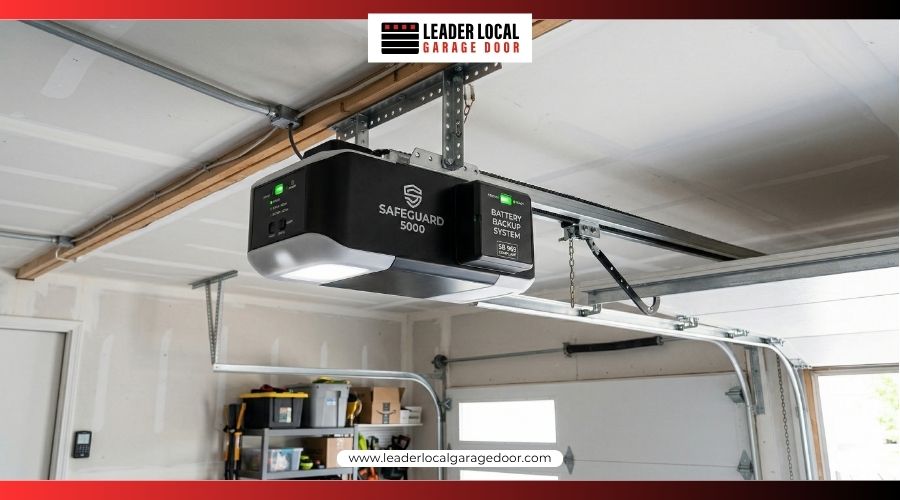
Certain regions legally require your automatic garage door opener to feature a battery backup. This component ensures you can open your garage during a grid power outage.
Under California Senate Bill 969, residential properties must include this backup power source. If a spring failure destroys an older opener motor, state law requires you to upgrade your unit to a compliant model.
How Should You Replace Garage Springs Safely?
Following industry standards during a replacement saves you money and extends the lifespan of your mechanical system.
- Replace both springs simultaneously to keep the door lifting evenly.
- Choose high-cycle springs because they withstand tens of thousands of additional uses.
- Hire a technician to calibrate the door weight to prevent the opener motor strain.
You can also prolong your system’s life by applying proper lubrication to your tracks and rollers, which reduces friction on the metal coils.
Where Can You Get Garage Door Spring Repair in Sacramento?
When your tension system snaps, prompt action prevents further property damage. Scheduling a professional garage door spring repair balances the heavy hardware, complies with local building codes, and restores your daily routine. Expert technicians carry the exact tools required to wind the steel coils safely and accurately.
Leader Local Garage Door is a 24/7 garage door service company in Sacramento CA, specializing in garage door repair, garage door installation, and garage door openers for homeowners.
Frequently Asked Questions
Do I need a licensed contractor for spring repair?
Yes, many jurisdictions require a licensed professional for this repair. Hiring a licensed contractor ensures code compliance and shields you from personal liability.
Can I safely replace a broken spring myself?
No. This repair requires specific winding tools and deep technical knowledge. Attempting a DIY fix routinely causes severe physical injury.
How long do high-cycle garage springs last?
High-cycle springs generally endure between 20,000 and 50,000 cycles. They provide a much longer operational life than standard builder-grade coils.
What causes a garage door spring to break?
Metal fatigue from daily use is the primary cause of failure. Extreme temperature shifts, rust buildup, and poor lubrication also weaken the steel over time.
Why should I replace both springs at the same time?
Both springs handle the exact same workload. When one breaks, the second is near the end of its life. Replacing both prevents an unbalanced door and saves you from a second service call.