Your garage door springs do the heavy lifting every time you leave the house, yet most homeowners ignore them until they snap. Understanding how long garage door springs last helps you budget for replacement and avoid being trapped in your garage on a busy morning.
Standard garage door springs are rated for 10,000 cycles, which translates to roughly 7 to 9 years for the average home. However, if you use your garage door like a front door (opening it 4+ times a day), those same springs may only last 3 to 5 years.
Below, we break down the math, the costs, and the critical safety signs every homeowner should check.
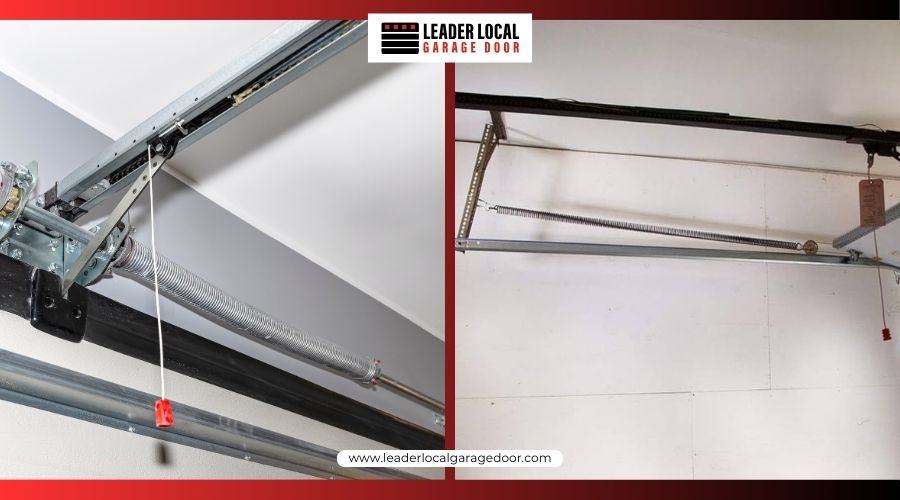
Torsion vs. Extension Springs
Before analyzing lifespan, you must identify which spring system drives your door. The durability and safety standards differ significantly between the two.
1. Torsion Springs (The Industry Standard)
- Location: Mounted horizontally on a metal shaft above the garage door opening.
- Lifespan: 10,000 to 20,000 cycles (Standard) / up to 50,000+ (High Cycle).
- How they work: They wind and unwind to generate torque, lifting the door via cables on drums.
Pro Tip: Torsion springs are safer in operation because they are contained on a shaft, but they are significantly more dangerous to install.
2. Extension Springs (The Economy Option)
- Location: Mounted above the horizontal tracks on both sides of the garage.
- Lifespan: 7,000 to 10,000 cycles.
- How they work: They stretch and contract (extend) to pull the door up.
- Pro Tip: These are common in older homes or low-headroom garages but are more prone to “whipping” breakage if safety cables are not installed.
A Tip for Longer-Lasting Springs: When you hire a pro, ask for high cycle springs. These heavy-duty springs cost about $30–$50 more than standard ones, but they last twice as long. It is a small price to pay now to avoid another repair bill later.
Calculate Garage Door Spring Lifespan by Usage
Most manufacturers rate springs at 10,000 cycles. Use this table to estimate how long your springs will actually last based on your household habits.
| Daily Cycles (Open/Close) | Estimated Lifespan (10k Rating) | Estimated Lifespan (20k High Cycle) |
|---|---|---|
| 2 Cycles (Work commute only) | ~13.7 Years | ~27 Years |
| 4 Cycles (Kids + Errands) | ~6.8 Years | ~13 Years |
| 6 Cycles (Active Family) | ~4.5 Years | ~9 Years |
| 8+ Cycles (Busy Hub) | ~3 Years | ~6 Years |
Warning Signs Your Garage Door Springs Are Failing
Springs rarely fail without warning. If you notice these symptoms, your spring is likely in the “Red Zone” (end of life).
| Symptom | Potential Cause | Severity |
|---|---|---|
| Door feels heavy (Manual test) | Springs have lost tension/fatigue. | Critical (Opener burnout risk) |
| Loud “Gunshot” Noise | A spring has already snapped. | Immediate Repair |
| 2-Inch Gap in Spring | Torsion spring separation (breakage). | Immediate Repair |
| Door Jerks/Moves Unevenly | Unbalanced tension (one spring broken). | High |
| Cables are loose/slack | Secondary failure caused by spring issue. | High |
Pro-Only Alert: Do NOT pull the red emergency release cord if the door is open and you suspect a broken spring. Without spring tension, the door can crash down, causing severe injury or structural damage.
Safety Codes and Compliance
While replacing a spring typically does not require a municipal building permit, specific safety codes and standards apply, particularly for extension springs.
1. Safety Cables for Extension Springs
If you have extension springs (the kind that stretch along the side tracks), you must have safety cables installed.
These springs stretch under high tension. If one snaps, it can whip around wildly, damaging your car or causing serious injury. A safety cable acts as a backup plan: it runs through the center of the spring and is secured to the wall. If the spring breaks, the cable catches it instantly.
Quick Check: Go look at your garage door tracks. If you see springs stretching along the sides without a steel cable running through their middle, you need to install them immediately.
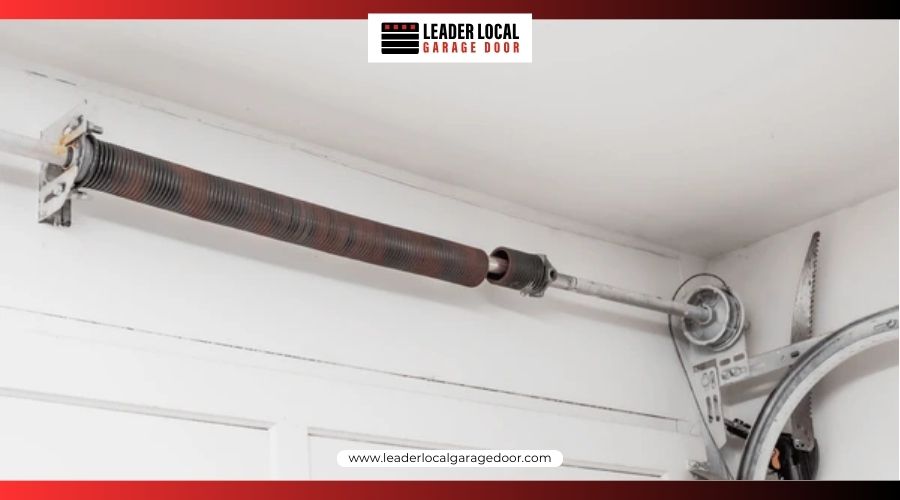
2. Torsion Spring Dangers
Torsion springs (located above the door header) are generally safer for daily use because they are secured onto a metal shaft. If they break, the shaft keeps them from flying loose.
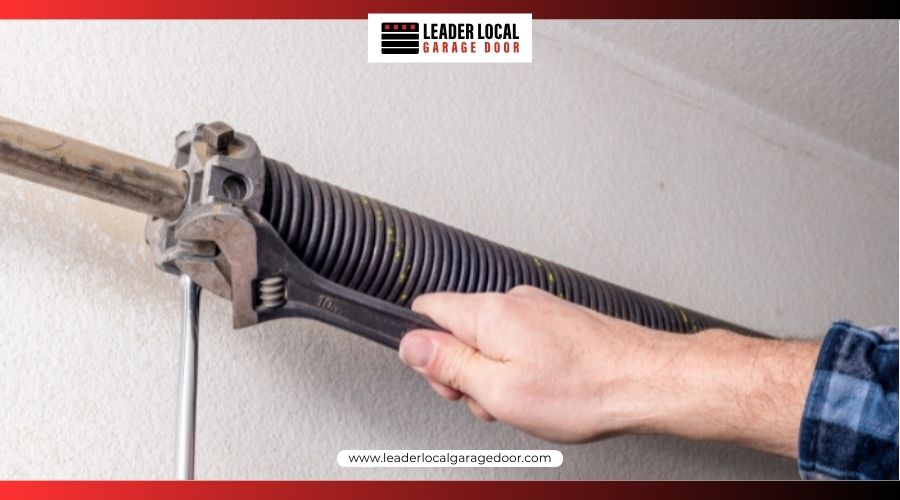
However, they are dangerous to repair. Adjusting these springs requires winding them tight with steel bars. The tension is strong enough to lift a 300-pound door. One slip during installation can result in a broken hand or jaw. Because of this risk, garage door spring repair is almost always a job for a professional, not a DIY project.
Cost to Replace Garage Door Springs
The price to replace springs varies depending on your specific location and the weight of your garage door. While the springs themselves are relatively affordable, the majority of the cost covers professional labor and the safety risks involved in handling high-tension steel.
US .Average Costs: Most homeowners can expect to pay between $200 and $400 for a standard professional replacement
| Service Item | Estimated Cost | Key Details |
|---|---|---|
| Single Spring Replacement | $150 – $350 | Includes parts and labor. |
| Double Spring Replacement | $275 – $700 | Highly recommended for balanced wear. |
| High-Cycle Upgrade | +$30 – $50 | Doubles the lifespan of the springs. |
| Permit Fees | $0 | Building permits are rarely required for repairs. |
| DIY Cost (Parts Only) | $50 – $100 | Warning: Carries significant injury risk. |
Understanding Your Estimate: Key Considerations
While the figures above serve as a national baseline, your final quote will depend on your specific garage environment. Here are the main factors that influence the job:
- Location and Door Size: The $200–$400 estimate typically covers standard residential doors. If you live in a high-cost area or have an oversized, custom wood carriage house door, expect the price to adjust upward to account for the heavier gauge steel required.
- Always Replace Both Springs: It is almost always smarter to replace both springs at once, even if only one has snapped. Since your springs were installed together, they have the same wear-and-tear. Changing the second one now prevents a separate emergency service call (and fee) when it inevitably fails a few months later.
- Why High-Cycle Springs Are Worth It: Upgrading from standard 10,000-cycle springs to 25,000-cycle springs costs a little more upfront, but it provides substantial long-term value. You are essentially buying durability that lasts years longer than the standard builder-grade option.
- Permit Requirements: While most minor repairs do not trigger a permit requirement, regulations vary by state and municipality. It is always best to ensure your technician is aware of local codes (AHJ) to keep your home compliant.
- DIY Safety Risks: The savings you get out of a DIY job only accounts for parts—it doesn’t account for the risk. Springs are under extreme tension and require specialized winding tools. The risk of injury is significant for untrained homeowners, making professional installation the safer choice.
When to DIY vs. Call a Professional
You Can Check This Yourself:
- Balance Test: Close the door. Pull the red release cord (disconnect opener). Lift the door manually to waist height. If it stays put, your springs are good. If it crashes down, they are shot.
- Lubrication: Spray garage door lubricant (not WD-40!) on the coils once a year to prevent rust, which causes friction and premature failure.
You Must Call a Pro When:
- Torsion Spring Replacement: Unless you have mechanical experience and the specific winding bars required, the risk outweighs the savings.
- Cable Re-spooling: If the cables have come off the drums, the door is under extreme, unbalanced tension. Often, this is a good time to consider a full garage door installation if your panels are also damaged.
Related Guides:
- What to Do If Your Garage Door Opener Remote Stops Working
- How to Secure Your Garage Door Against Burglars
- The Role of Garage Door Insulation in Noise Reduction
Professional Spring Replacement in Sacramento
Garage door springs are the muscles of your door. When they get tired, your whole system suffers—and when they break, they can shut down your entire day.
Leader Local Garage Door is a garage door service company in Sacramento CA, specializing in garage door repair, garage door installation, and garage door openers for homeowners. We understand that a broken spring is an emergency. If you are in Sacramento or the surrounding areas, our technicians are ready to help with same-day service. We stock our trucks with high-cycle springs to ensure your repair isn’t just a quick fix, but a long-term solution that keeps your door running smoothly for years to come.
Don’t risk a DIY injury with high-tension steel. Contact Leader Local Garage Door today to get your door back on track safely.
Frequently Asked Questions
Can I open my garage door with a broken spring?
You should not. The springs lift 90% of the door’s weight (often 150+ lbs). Attempting to lift it manually can cause back injury, and using the electric opener will likely strip the gears or burn out the motor within seconds.
Why do springs break in the winter?
Steel contracts in cold weather. If your springs are already fatigued (near the end of their cycle life) or rusty, the added brittleness from freezing temperatures is often the final straw that causes them to snap.
How do I know if I have 10,000 or 20,000 cycle springs?
It is difficult to tell visually once installed. However, high-cycle springs generally have a larger wire gauge (thickness) or a longer length to distribute the tension over more coils. Always check your receipt or ask the installer for the cycle rating.
Does homeowner’s insurance cover broken springs?
Typically no. Springs are considered a “wear and tear” item, similar to tires on a car. However, if the broken spring causes the door to fall and damage your car, the car damage might be covered under your auto policy. (Learn more about Homeowner’s Insurance here).
What if my opener is broken, too?
If a spring break burned out your motor, you might need to upgrade. Learn how to choose the best garage door opener for your home before your next service call.