Most garage door opener trouble starts small, like a remote that quits or a door that reverses for no clear reason. Some of those problems take five minutes and a fresh battery. Others put your hands near a spring under heavy tension or a motor wired to household current, and that’s where DIY garage door opener repair stops being a smart way to save money. When the fix turns out to be bigger than a battery or a dirty lens, opener repair from a licensed technician is the safer call. In this guide, we walk through which opener problems are safe to handle yourself, which ones need a pro, and the safety and licensing rules behind that decision.
Why the Opener Is Rarely the Dangerous Part of a Garage Door
Your opener doesn’t actually lift the door. The springs carry most of the weight, and the motor just guides a door that should already be balanced. That’s why the real hazards in opener repair usually come from what’s connected to it rather than the motor itself. Stored spring energy, household wiring, and the automatic reversing system required on openers sold today are what decide whether a job is safe for you to take on.
If you still aren’t sure what’s causing the problem, working through the most common opener symptoms and fixes will help you narrow it down. Once you know what’s wrong, the next question is who should fix it.
Garage Door Opener Fixes That Are Safe to Handle Yourself
These jobs keep your hands away from the springs and never involve opening the motor housing. Here are the opener fixes most homeowners can take care of with a step ladder and the owner’s manual:
- Dead Remote or Keypad Batteries: A remote that works up close but not from the driveway usually needs a new battery. Swap it before assuming anything else is wrong.
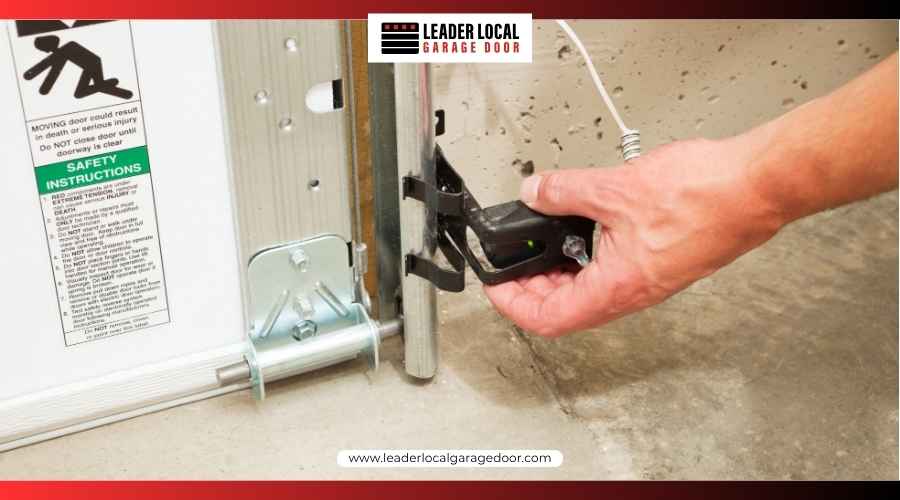
- Dirty or Misaligned Safety Sensors: The two small photo eyes near the bottom of the tracks have to see each other before the door will close. Wiping the lenses and realigning the sensor brackets is safe, low-voltage work.
- Tripped Breaker or GFCI Outlet: When the opener is completely dead, check the outlet it plugs into first. Resetting a breaker or a GFCI is fine, but opening the outlet box or the opener’s wiring cover is not.
- Wall Control Lock Mode: Many wall controls have a lock or vacation button that shuts off every remote in the house. It’s easy to bump by accident and just as easy to turn back off.
- Reprogramming a Remote: Most openers have a learn button on the motor unit for pairing remotes and keypads, so all you need is a sturdy ladder and your model’s instructions.
One more job belongs on every homeowner’s list. The federal safety standard for garage door openers requires opener manuals to tell you to test the door monthly. The door must reverse when it touches a 1½ inch object, or a 2 by 4 board laid flat on the floor. If it doesn’t reverse, stop using the opener until it’s repaired.
How to Tell Whether the Garage Door or the Opener Is the Problem
An opener that hums, strains, or quits partway up is often reacting to a door that’s out of balance, not failing on its own. This quick balance check shows which one you’re dealing with, and it only takes a few minutes with the door fully closed:
- Close the door all the way and unplug the opener.
- Pull the emergency release cord to disconnect the door from the opener. Only do this with the door closed.
- Lift the door by hand to about halfway, then let go slowly while keeping your hands clear. If the door feels very heavy or won’t budge, stop and lower it.
- Watch what the door does next. A balanced door stays roughly in place, while one that drops or drifts upward has a spring problem.
- Lower the door, plug the opener back in, and run it once so the trolley reconnects.
If the door failed the balance check, the opener isn’t the part that needs attention. Turning up the opener’s force won’t fix it either, and that shortcut is one of the riskier moves on the next list.
Garage Door Opener Repairs That Need a Licensed Technician
These are the jobs where one wrong move can hurt someone or quietly disable the door’s safety system. If your problem shows up in the list below, it’s time to hand it to a trained technician:
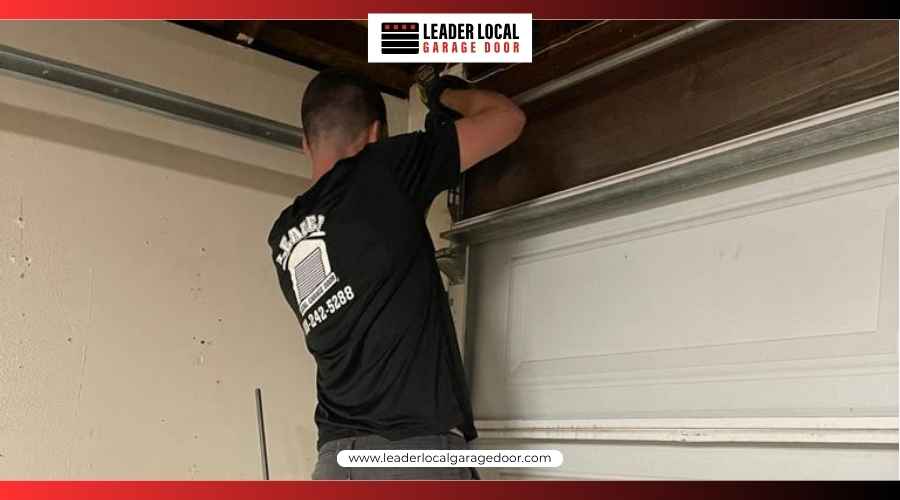
- Broken Springs or Frayed Cables: DASMA, the door industry’s trade association, says spring systems should be repaired only by trained professionals. An opener that keeps straining against a broken spring can also strip its own drive gear.
- Raising the Force Setting to Push a Heavy Door: The adjustment dial sits right there on the motor, which makes this tempting. More force means the door presses harder on anything in its path before it reverses, and federal manual language warns that a poorly adjusted opener “may cause severe injury or death.”
- Anything Inside the Motor Housing: Logic boards, motor wiring, and internal switches all run on household current. Unplugging the unit helps, but diagnosing a board failure without the right meter usually ends with buying parts you didn’t need.
- New Outlets or Hardwired Openers: Adding or moving a ceiling outlet, or wiring an opener straight into a circuit, is electrical work that can require a permit. The California Electrical Code also calls for GFCI protection on garage receptacles.
- Bent Tracks or a Door Off Its Rollers: This shows up as an opener that stops or reverses, but the real issue is a door that could come loose. Keep people and cars out from under it until it’s secured.
Garage Door Opener Repairs That Depend on Your Experience
A few repairs sit in between, and whether DIY garage door opener repair makes sense here depends on your comfort with tools and whether you can keep the door secured while you work. If you’re handy, these are fair game, though each one comes with a catch worth knowing first:
Drive Gear and Sprocket Kits: Worn plastic gears are a known weak point on many chain and screw drive openers, and replacement kits exist for plenty of models. Expect to take the motor unit apart and release chain tension, so keep the door closed and disconnected the whole time.
Replacing Damaged Sensor Wire: The sensors run on low-voltage wire, which makes splicing a chewed section low risk. The usual trouble afterward is wire routed where the door can pinch it.
Swapping the Whole Opener: Hanging a new unit is a common weekend project. Setting the force and travel limits correctly and passing the reversal test matter more than the mounting, and if the old opener was straining because of worn springs, a new motor won’t solve that.
Licensing and Code Rules Behind Garage Door Opener Work
In California, a job worth $1,000 or more in combined labor and materials needs a licensed contractor. That threshold rose from $500 on January 1, 2025, and the state licensing board’s rule change also removes the exemption for any job that needs a permit or involves hiring workers. A handyperson can legally swap a remote or clean your sensors. A full opener replacement with new wiring is a different story.
Licensing matters for more than paperwork. A licensed contractor is accountable to the Contractors State License Board and has to carry a contractor’s bond, and an insured one protects you if someone gets hurt or property gets damaged during the repair. You can look up any contractor’s license status on the CSLB website before you book, and it’s reasonable to ask for proof of insurance as well.
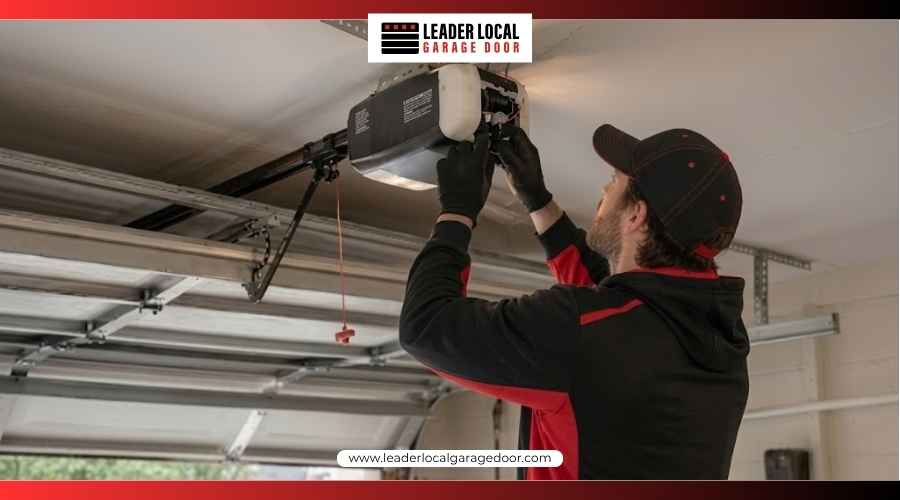
Keep Your Garage Door Opener Working Safely With the Right Repair Call
A dead remote battery or a smudged sensor lens is a small win you can handle on a Saturday morning. Springs, wiring, and a door that fights its opener are a different kind of job, and our technicians bring the tools and training to work on every part of that system, from the drive gear to the reversing sensors. Schedule a visit with our team today and get the whole opener checked by someone trained to handle it.
Leader Local Garage Door is based in Sacramento and repairs garage doors and openers across the Sacramento Valley, Sierra Foothills, and Central Valley. Our licensed and insured technicians work on chain-drive, belt-drive, screw-drive, and smart openers, along with the springs and cables every opener depends on.
Frequently Asked Questions
Is it safe to fix a garage door opener yourself?
It’s safe for some jobs. Changing remote batteries, cleaning and realigning the safety sensors, resetting a tripped outlet, and reprogramming a remote are all low risk. Anything involving springs, cables, internal wiring, or a higher force setting should go to a trained technician, because those parts can cause serious injury when handled wrong.
Can I adjust the force setting on my garage door opener?
You can make small adjustments using your owner’s manual, as long as you retest the reversal right after. Never raise the force to push a door that feels heavy or binds, since that usually points to a spring or track problem. Extra force makes the door press harder on anything in its path before it reverses.
Do I need a licensed contractor to replace a garage door opener?
In California, you need a licensed contractor when labor and materials total $1,000 or more, when the job needs a permit, or when the person doing it hires workers. A simple plug-in swap may fall under that limit, but new wiring can change the answer. You can check any contractor’s license on the CSLB website.
Why won’t my garage door opener lift the door?
When the motor runs but the door won’t rise, a broken spring is one of the most common causes, since the opener isn’t built to lift the door’s full weight. A stripped drive gear is another. Stop running the opener, keep the door closed, and have the springs checked before trying anything else.
Is it safe to pull the emergency release cord?
Yes, as long as the door is fully closed. Pulling the release with the door open disconnects it from the opener, and if a spring is broken, the door can drop fast. If the door is stuck open, keep people and cars out from under it and have a technician secure it.