A new garage door is one of the bigger home upgrades people put off. The price and the process both feel like a mystery until a quote shows up. The real cost depends on more than just the door panel. The work also involves more steps than swapping an old panel for a new one.
Before you schedule a professional to put in your new door, it helps to know what drives the price. It also helps to know how long the job takes. In this guide, we break down the real cost factors. We also walk through what happens on installation day. Then we answer the questions homeowners ask us most.
What Actually Determines the Cost of a New Garage Door
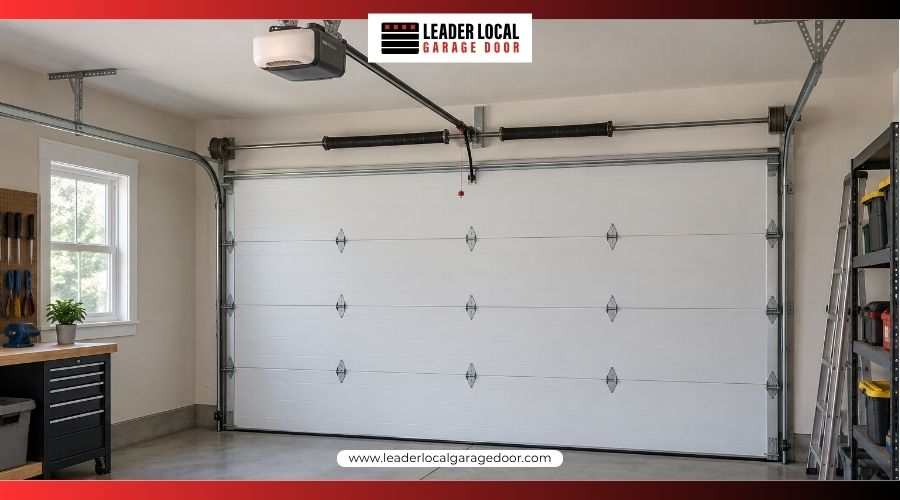
The price on a garage door quote can swing a lot. It’s rarely just about the door panel. A handful of factors set your final price. Most of them are things you can control before you call for an estimate:
- Material and Construction: Steel, aluminum, wood, and composite doors all carry different price points, and wood typically runs highest because of the labor and finishing involved.
- Size and Number of Panels: A single-car door costs less than a double-wide or three-car door. A bigger opening needs more material and more time to install.
- Insulation Level: A higher R-value adds foam core and a second steel skin. That raises the price, but it also cuts noise and energy loss, especially if your garage is attached to your house.
- Opener and Automation: Adding or upgrading to a new automatic opener, smart controls, or battery backup is a separate line item from the door itself.
- Old Door Removal and Haul-Away: Most quotes include taking down and hauling off your existing door, but it’s worth confirming that in writing rather than assuming.
- Site Conditions and Electrical Work: If your garage has no outlet near the opener, an uneven opening, or damaged framing, the job needs extra labor beyond a standard swap.
What a Realistic Budget Looks Like
National cost data shows why quotes vary so much. A standard garage door installation costs $1,151 to $1,869, with an average of about $1,400. Add in different door sizes, security features, or opener types, and the range widens to $750 to $4,500. Neither range covers premium materials like glass, custom wood, or oversized commercial doors. Those can push a project well past $4,000.
These figures are current as of 2026, and it’s worth rechecking them each year since material and labor costs shift. Ask your installer for an itemized quote instead of a flat number. That way you can see exactly which factor is driving your price up or down. If you’re weighing a repair instead of a full replacement, the cost factors look different.
What Happens on Installation Day
A professional crew moves through the job in a set order. Knowing that order helps you plan your day. Here’s what typically happens once the truck pulls into your driveway:
Removing the Old Door and Prepping the Opening
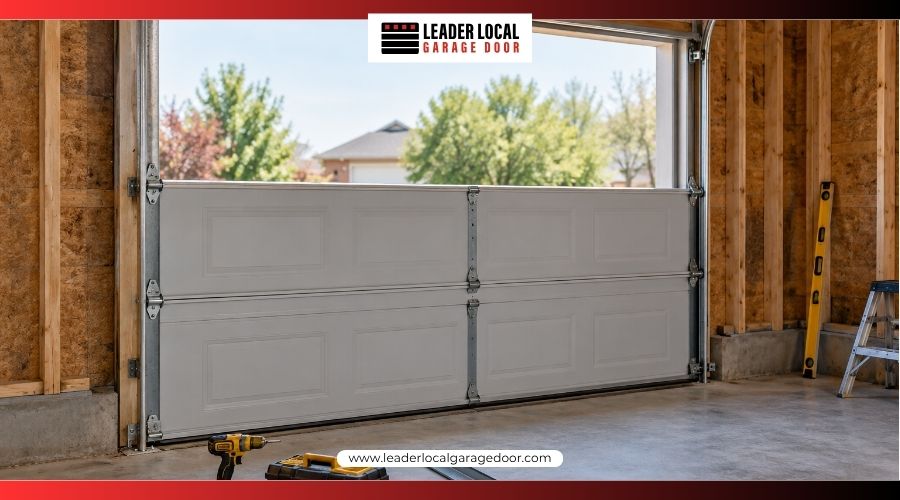
The crew starts by taking down your old door and its tracks. Then they check the opening before anything new goes in. Here’s the order they follow:
- Disconnect the opener and release spring tension safely.
- Remove the old panels, tracks, and hardware.
- Inspect the framing, header, and slab for damage or an out-of-square opening.
Setting the Track and Panels
Once the opening is ready, the crew builds the door panel by panel, starting from the ground up. Here’s how it comes together:
- Position and secure the bottom panel with weatherstripping attached.
- Install vertical tracks on both sides, keeping them parallel to the door edges.
- Stack and hinge each additional panel, seating the rollers into the tracks as you go.
Installing Springs, Cables, and the Opener
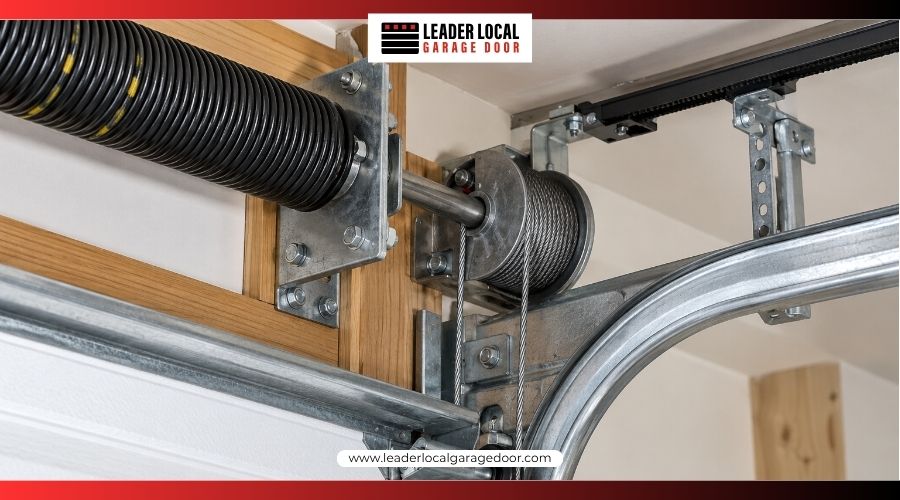
This stage carries the most safety risk. Torsion and extension springs hold enough stored energy to cause a serious injury if handled wrong. The team works through it in this order:
- Install springs to the manufacturer’s tension specification.
- Attach and route the lifting cables over the pulleys.
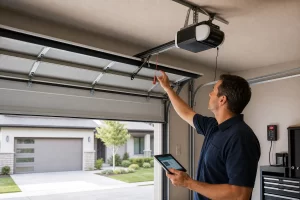
- Mount the opener, connect the trolley and arm, and wire in safety sensors.
Final Balance and Safety Checks
The last stage confirms the door is ready for daily use, not just installed. Here’s what gets checked before the crew calls the job done:
- Test door balance by disconnecting the opener and moving the door by hand.
- Align and test the photo-eye safety sensors.
- Program remotes or a keypad and walk through operation with the homeowner.
Most professional crews finish a standard single-door installation in about three to four hours. That’s noticeably faster than the six-to-eight-hour timeline in do-it-yourself guides. A trained team works the sequence without stopping to troubleshoot each step. A second door, an oversized opening, or extra electrical work can stretch that window.
Do You Need a Permit to Install a New Garage Door?
Permit rules come down to one question: does the job change your garage’s structure, or does it just swap what’s in the existing opening? A like-for-like replacement in a standard opening is usually exempt from permit rules. Enlarging the opening, changing the frame, or switching door types usually needs one. Permit rules are set locally, so confirm the specifics with your city or county building department before work starts. This matters most if you’re widening the opening or going from a single door to a double.
Get a Clear Number Before You Book Your Installation
A quote that breaks out material, labor, and haul-away costs beats a single flat number every time. It shows you exactly where your money is going, and where there’s room to adjust. Our certified technicians walk every homeowner through those numbers in person. We match the door to your garage’s actual opening, not a generic size chart. Reach out today to schedule that walkthrough and see a real price before you commit to anything.
Leader Local Garage Door installs and repairs garage doors for homeowners throughout the Sacramento, CA area. We’re licensed and insured, and every new door comes with a 1-year parts warranty and a 30-day labor warranty. If you’re weighing a new installation against a repair, we can help. Our team will walk you through the same cost and timeline factors covered above for your specific garage.
Frequently Asked Questions
How much value does a new garage door add when you sell your home?
A new garage door is one of the highest-return home upgrades tracked nationally. According to Zonda’s 2025 Cost vs. Value Report, garage door replacement recouped an average of 267.7% of its cost at resale. That ranked first among every home improvement project in the report. Your actual return still depends on matching the door’s style to your home and neighborhood.
Can you install a garage door yourself instead of hiring a professional?
Technically yes, but it isn’t a beginner project. Garage door springs store enough tension to cause a serious injury if released the wrong way. Getting the track alignment off by even a little wears out rollers and openers early. A botched DIY install can also void the manufacturer’s warranty before you ever use the door.
Does installing a new garage door opener require an electrician?
Not usually. Most garage door openers plug into a standard grounded outlet that’s already in the garage. The installing technician can usually wire it in during the same visit as the door. An electrician only needs to get involved if your garage has no outlet near the opener, or if the circuit needs an upgrade.
Do I need to remove my old garage door before a new one is installed?
No. Removing and hauling away the old door is typically part of a professional installation. Confirm it’s included on your written quote before the job starts, since some installers itemize haul-away separately. Doing it yourself only makes sense if you plan to reuse or sell the old door.
What’s the difference between garage door installation and garage door replacement?
People use the terms interchangeably, but they’re not quite the same. Replacement usually means swapping in a new door for an opening that stays the same size. Installation can also include a new or resized opening, and that distinction matters most for permits. A like-for-like swap rarely needs one, but changing the opening’s size or structure usually does. For a closer look at what drives replacement costs specifically, see our breakdown of the numbers.