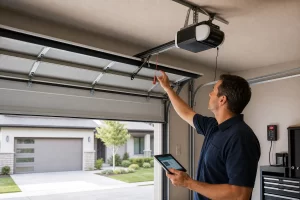
Garage door problems occur when mechanical parts like torsion springs, cables, or safety sensors fail or lose alignment. You can fix minor issues like dirty photo eyes or dry rollers yourself. However, broken high-tension springs and snapped cables require a professional technician to prevent injury. Ignoring these component failures leads to expensive repairs and safety risks. A standard residential door relies on a high-pressure counterbalance system. This system must synchronize perfectly with the motor and safety sensors. When hardware loses alignment or springs reach their fatigue limit, the door becomes a physical hazard. This guide explains how to identify failing components and handle repairs safely.
Diagnostic Chart: How Severe Are Your Garage Door Problems?
Determining if a garage door issue needs a quick cleaning or emergency service is your first step in maintenance. This table compares primary mechanical symptoms with their risk levels and the correct response.
| Symptom | Severity | Recommended Action |
| Loud Banging Noise | High | Stop use immediately. Call a professional for spring replacement. |
| Door Reverses Automatically | Medium | Clean sensor lenses. Check for obstructions in the door path. |
| Squeaking or Grinding | Low | Apply lubricant to roller bearings and hinges. Clean the tracks with a damp cloth. |
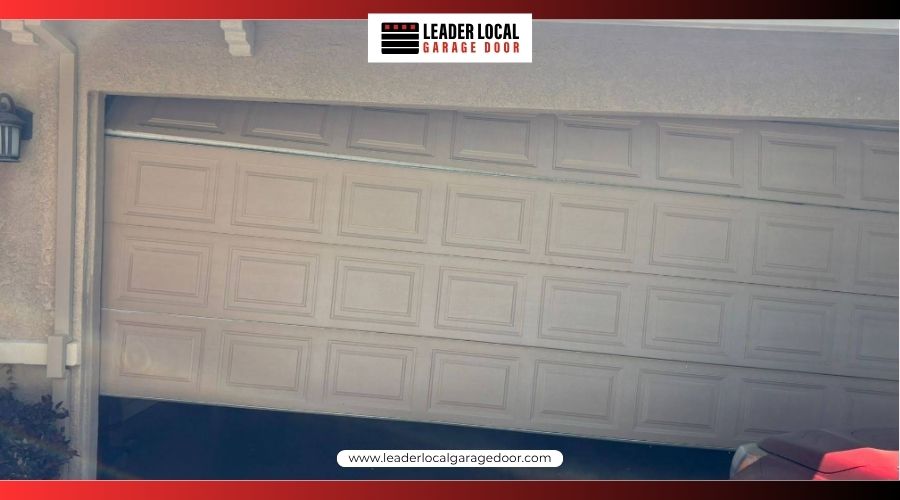
| Door Hanging Unevenly | High | Stop use. A cable has likely slipped or frayed and needs professional repair. |
| Motor Runs But No Movement | Medium | Check if the opener is disconnected. Inspect the chain, belt, or internal drive gear. |
| Door Binds or Sticks | Medium | Inspect tracks for bends or impacts. Requires realignment or replacement. |
| Remote Not Responding | Low | Replace the transmitter batteries. Check the wall button functionality. |
| Drafts or Water at Bottom | Low | Replace the weather stripping seal to block pests and moisture. |
What Causes Common Garage Door Problems?
Most garage door failures stem from component fatigue, physical obstructions, or electrical communication errors. Watch for these physical symptoms when your system begins to fail:
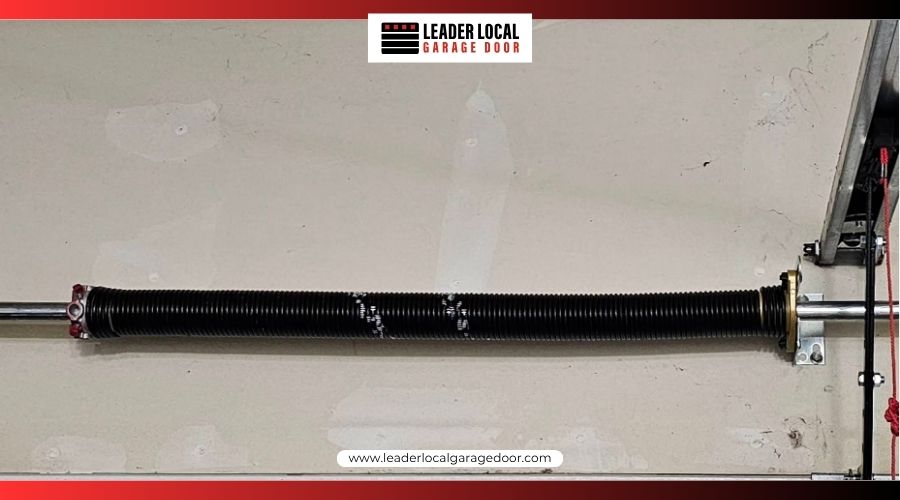
- Broken Torsion Springs: A loud bang signals that a spring has snapped. The door will feel too heavy to lift manually, and the motor will fail to move it.
- Misaligned Photo Eyes: If the door starts to close and reverses immediately, the safety sensors are failing. They are likely dirty, misaligned, or blocked. Check federal safety sensor guidelines to ensure proper placement.
- Worn Rollers: Grinding or popping noises indicate worn rollers. They may have fallen off the track, developed flat spots, or suffered seized bearings.
- Frayed Cables: Steel cables that look fuzzy or have loose strands will snap soon. This causes the door to crash down or hang crookedly.
- Stripped Drive Gears: If the motor runs but the door stays still, the opener has disconnected. The chain or belt may have broken, or the internal drive gear may have stripped.
- Bent Tracks: Impact from a vehicle bends the metal tracks. This causes the door to bind or get stuck mid-cycle.
- Dead Transmitter Batteries: A door that ignores the remote but works via the wall button needs new batteries.
- Worn Weather Stripping: Cracked bottom seals allow water and pests to enter. This damages the bottom section of wood doors over time.
How to Fix Minor Garage Door Problems Yourself
You can resolve many minor issues without specialized tools or exposure to high-tension parts. Follow these straightforward steps to fix minor noise issues and prevent sensor malfunctions:
- Lubricating Moving Parts: Apply a lithium or silicone-based garage door lubricant to roller bearings, hinges, and springs. This reduces friction and quiets squeaks. Clean the tracks with a damp cloth, but do not spray lubricant inside them.
- Cleaning Sensor Lenses: Wipe the photo eye lenses with a soft cloth. This ensures dust or cobwebs do not block the infrared beam.
- Tightening Hardware: Use a socket wrench to tighten loose nuts and bolts. Garage door tracks and brackets loosen over time from daily vibration.
- Clearing the Tracks: Remove dirt, pebbles, or old grease from the metal tracks. Use a vacuum or damp cloth to help the rollers move smoothly.
- Testing Balance: Only test the balance when the door is fully closed. Look for broken springs, frayed cables, or crooked sections first. Pull the red emergency release cord. Lift the door halfway and see if it stays in place. If it falls, rises, or feels unusually heavy, stop using the door and call a technician.
When to Hire a Professional for Garage Door Problems
High-tension components like springs and bottom brackets hold enough energy to cause severe injuries. Professional technicians provide these essential services to restore your hardware to factory safety standards:
- Spring Replacement: Experts calculate the exact wire size and length required to balance your specific door weight. This prevents motor burnout.
- Track Realignment: Professionals inspect the track alignment and spacing. They adjust or replace damaged sections so the door travels smoothly.
- Opener Logic Board Repair: Technicians diagnose complex electrical shorts or radio frequency interference. These issues cause erratic motor behavior.
- Safety Inspections: A trained technician checks the auto-reverse system and external entrapment protection. This guarantees the opener operates safely.
- Cable Re-Spooling: If a cable jumps off the drum, a pro resets the tension safely. This prevents the cable from snapping and causing structural damage.
- Panel Replacement: Technicians can often swap out a single dented panel. This saves you from buying a completely new door.
Schedule Prompt Garage Door Repair
Ignoring a noisy or slow garage door leads to mechanical failure. Regular visual checks, clean tracks, and lubricated moving parts reduce wear. If you find a broken spring or a frayed cable, leave the tools in the drawer and call a garage door specialist.
Prioritizing safety ensures your garage remains a secure entry point. Leader Local Garage Door is a 24/7 garage door service company in Sacramento CA, specializing in garage door repair, garage door installation, and garage door openers for homeowners.
Get your door back on track. Connect with our garage door repair team for a 25-point safety inspection and fast fix.
Frequently Asked Questions
Why is my garage door making a loud banging noise?
A loud bang indicates a torsion spring has snapped under pressure. When the spring breaks, it releases stored energy instantly. This creates a sound similar to a gunshot.
Why does my garage door open but won’t close?
A blocked, dirty, or misaligned safety sensor usually causes this. If the photo eyes detect an obstruction or cannot align with each other, the motor refuses to close the door.
How do I know if my garage door spring is broken?
You will hear a loud noise. You will also see a visible gap of two to three inches in the metal coil above the door header where the steel has separated.
What causes a garage door to move unevenly?
A frayed or slipped cable on one side of the door causes uneven movement. The unequal tension pulls the door upward at an angle, causing it to jam in the metal tracks.
Can I fix a garage door that is off-track myself?
Do not attempt to fix an off-track door yourself. The door lacks track support and can fall unexpectedly. The high-tension cables require professional tools to reset safely.